Actions on Broadcasters
The top of the Info pane includes buttons for taking the following actions on the selected Broadcaster:
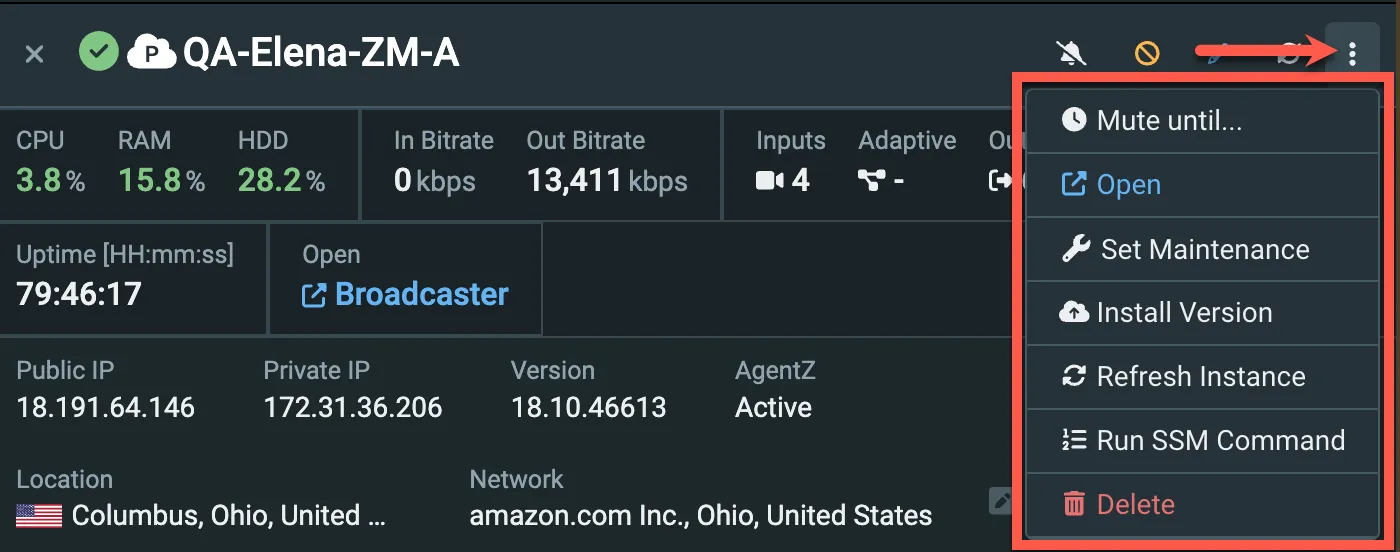
- Mute/Unmute – disables/activates notification for error/recovery events. Set the date and time when the mute will automatically be cleared by clicking on the down arrow and selecting mute until.
- Disable – disables the Broadcaster. When disabling a Broadcaster, you can migrate the existing sources and channels to a different Broadcaster by selecting the Migrate sources and channels to different Broadcaster(s) option and then selecting the Broadcaster(s) preference on which the streams will be hosted in the Target Broadcaster/s drop down menu. Options are: Prefer Primary Broadcasters, Primary Broadcasters only, Backup Broadcasters only or Prefer Backup Broadcasters. The selected target broadcaster option will override the original Target Broadcaster option of the Source/Channel, however if the source/channel is configured to a specific/named Broadcaster Target it will not participate in the migration process. Similarly, if the selected setting is Backup Broadcasters only and the Broadcaster that is being disabled is the only Backup Broadcaster in the cluster, the migration will not be possible.
- Edit – enables you to edit the Broadcaster configuration.
- Refresh – refreshes the screen.
- Open Broadcaster – click to access the Broadcaster UI.
- Set Maintenance – click to turn on Maintenance Mode, which prevents new streams from being assigned to this Broadcaster.
- Config - click to view instructions on how to configure the Broadcaster to connect to ZEN Master.
- Install Version - click to upgrade/downgrade the Broadcaster's software version. To install the new version:
- In the New Broadcaster Version field, select the new version to install. Private version are indicated with a lock icon.
- In the Architechture field, make sure that the correct server architecture is selected.
- Click Install.
- See additional information in the Installing a New Broadcaster Version Using ZEN Master section below
- Refresh Instance - for Broadcasters running on AWS, this feature allows Users to ‘swap’ out the existing instance for a fresh instance, useful for OS patching, instance re-sizing, OS Updates, etc. The new instance will re-connect to ZEN Master in place of the existing instance. See the Refresh Instance section below.
- Run SSM Command - ZEN Master now provides the facility to run AWS SSM commands directly within the ZEN Master User Interface. While multifunctional, this feature is primarily provided in support of Infosec teams with system update and patching requirements. See the Run SSM Commands section below for more details.
- Delete – deletes the Broadcaster. When deleting a Broadcaster, you can migrate the existing streams to a different Broadcaster by selecting the Migrate sources and channels to different Broadcaster(s) option and then selecting the Broadcaster(s) preference on which the streams will be hosted in the Target Broadcaster/s drop down menu. Options are: Prefer Primary Broadcasters, Primary Broadcasters only, Backup Broadcasters only or Prefer Backup Broadcasters. The selected target broadcaster option will override the original Target Broadcaster option of the Source/Channel, however if the source/channel is configured to a specific/named Broadcaster Target it will not participate in the migration process. Similarly, if the selected setting is Backup Broadcasters only and the Broadcaster that is being deleted is the only Backup Broadcaster in the cluster, the migration will not be possible.
- Widgets/Tabs view.
Installing a New Broadcaster Version Using ZEN Master
When you click Install Version in the action dropdown, the following screen opens:

Note that you are shown the current Broadcaster version, along with a dropdown menu of other available versions, with the latest on top. Also note the list of objects on the Broadcaster, which we will return to shortly.
When choose a new version and click Install, in most cases ZEN Master will handle the new installation completely, and there will be no need for you to open the Broadcaster UI.
In some cases this will not succeed, because upgrading from some older versions (from 16.x to 18.x or 19.x, for example) requires some changes on the server or container that the Broadcaster runs on that ZEN Master cannot make. In these cases, you will see a red error message explaining the issue.
Note also that once installation starts, the objects list will change to display both Initial Status and Status. This will help you ensure that sources and targets restart properly after installation of the new version (or in some cases, that the new version fixes an issue with a source or target).
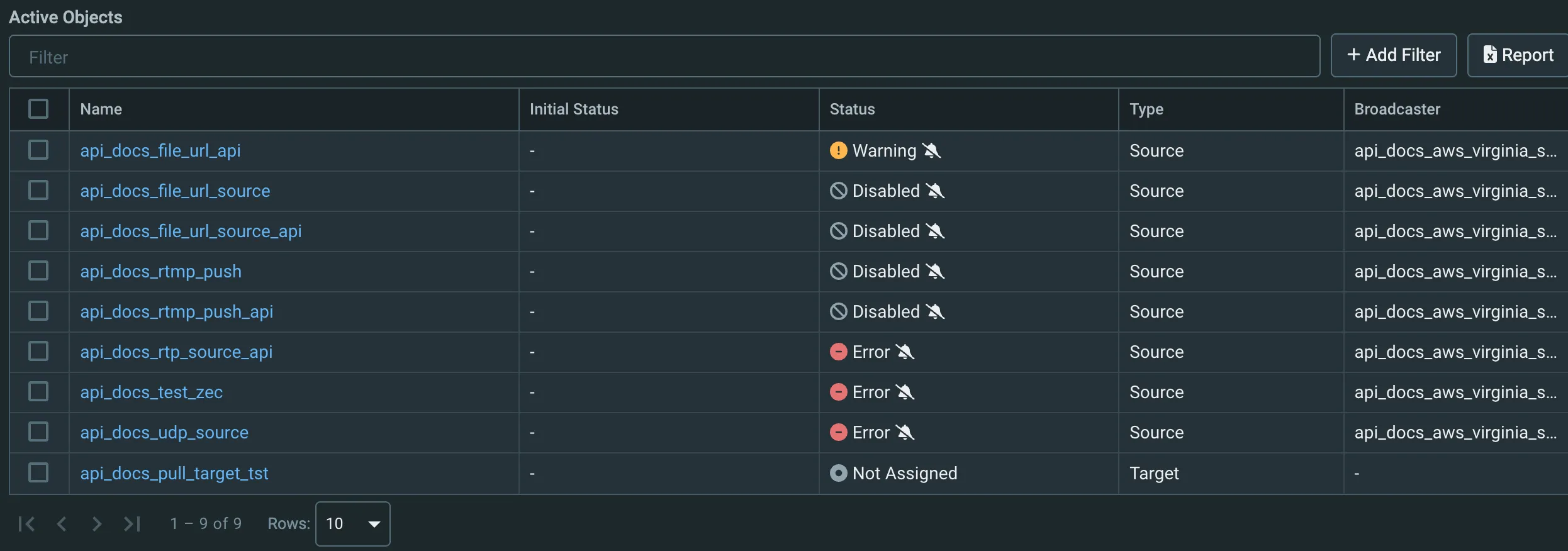
Note that object status does not update automatically as soon as the installation is complete, but rather updates every 30 seconds automatically.
Also note the indication of the Broadcaster the object is operating on - if this Broadcaster is part of cluster with failover, a source might have been redirected to another Broadcaster during the update.
When the installation of a new Broadcaster version completes successfully, a green success message will appear.

Refresh Instance
When you select this option on the Broadcaster Action Menu, the following screen will open:
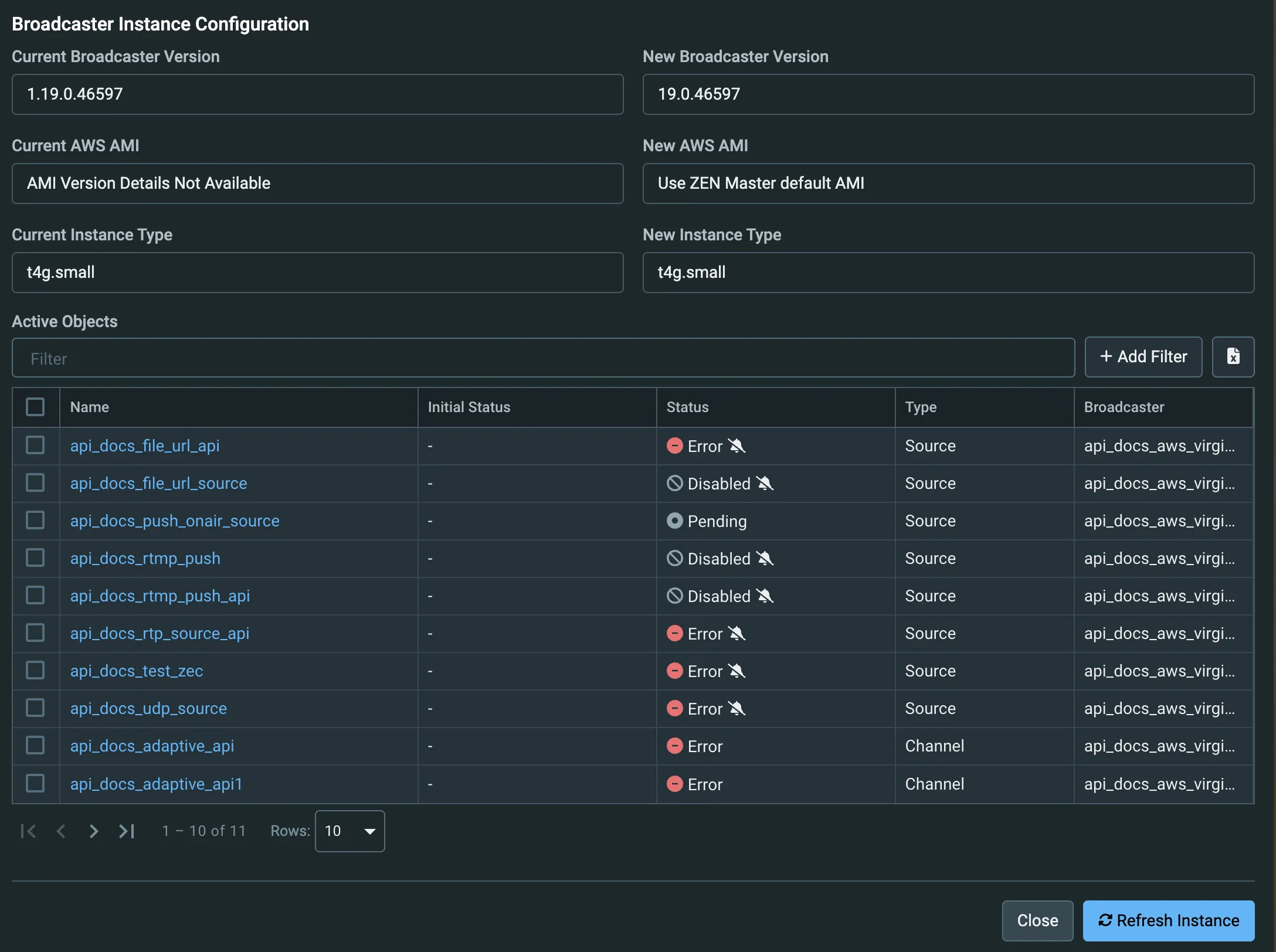
You cannot modify the changes to be made to the Broadcaster and AMI versions, or the instance size. You can select sources and specify the actions to be taken on them. By modifying the cluster settings before running Instance Refresh, you can specify the Broadcaster and AMI versions you want for the cluster.
While Refresh is running, ZEN Master will:
- Update the active object status with the initial and current status of all objects.
- Monitor the Broadcaster status.
- Notify the User on completion success.
Click Refresh Instance to begin the refresh, or Close to abort it.
Run SSM Command
Note that to enable this feature, some setup is required on the AWS side (by an admin on your AWS account) to provide the set of scripts you want to enable ZEN Master to run, and you will also need to modify the AWS policy to allow ZEN Master to initiate the commands. See the section on AWS Requirements below.
When SSM is enabled for your account, selecting the Run SSM Command from the Broadcaster Action Menu opens this screen:
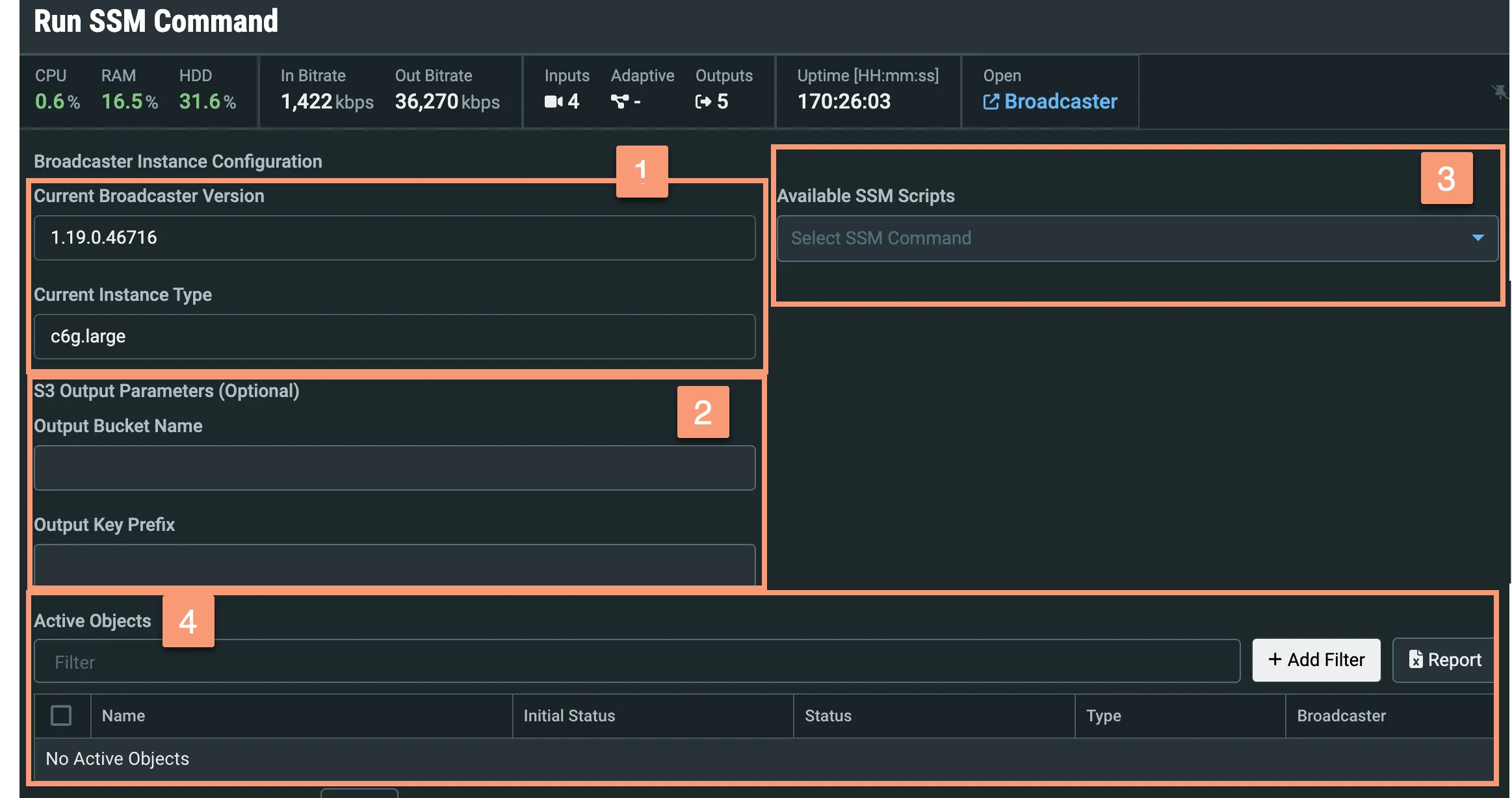
In this view you will see:
- Current Broadcaster details (not editable).
- Optional S3 Bucket details if you want the output to go to S3.
- A dropdown list of SSM Commands (e.g. ‘yum update’) available to ZEN Master.
- The Broadcaster Active Objects table.
- To execute the command, click the Run SSM Command action button.
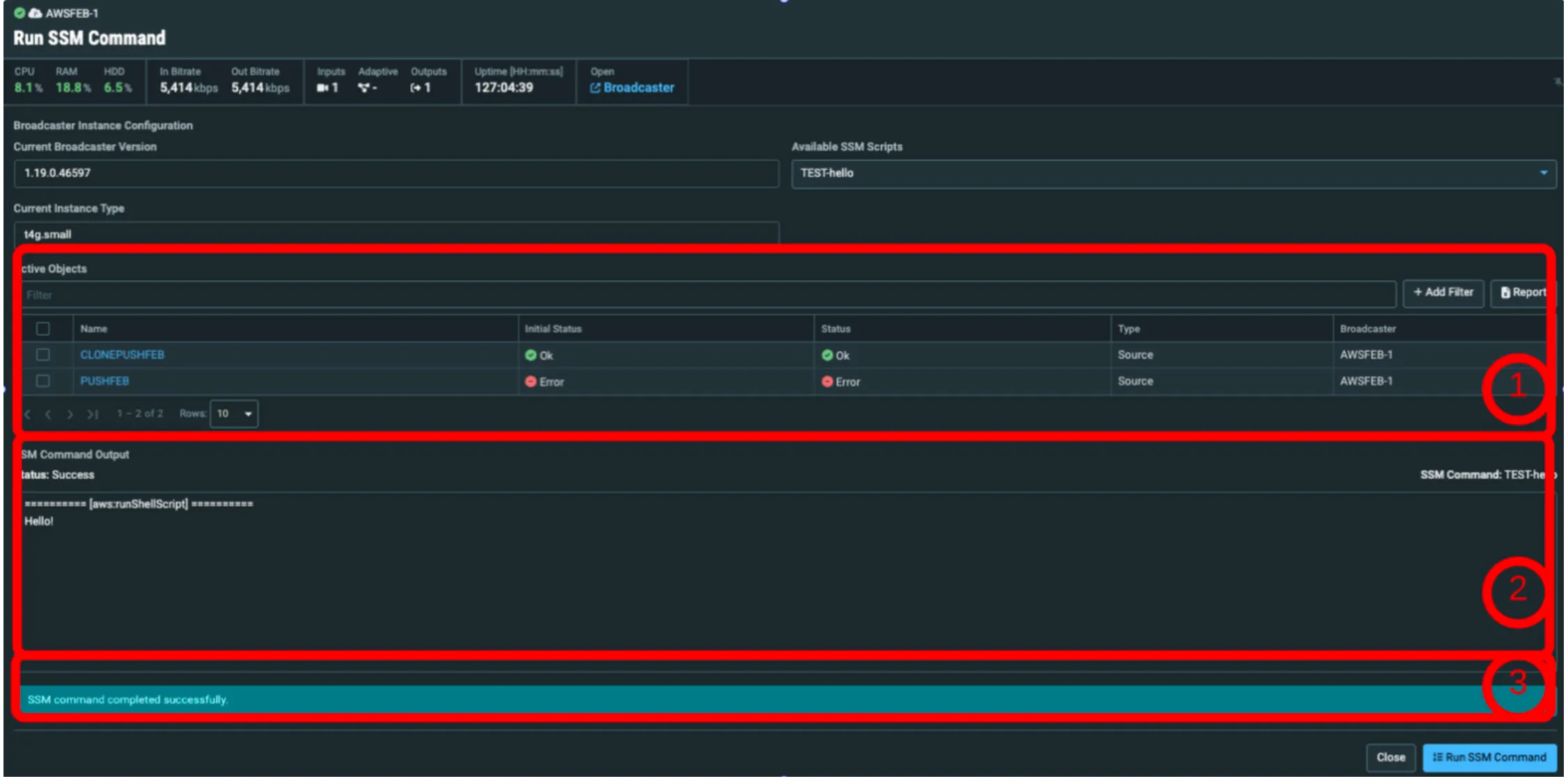
When you run a selected SSM command, ZEN Master will:
- Update the active object status with the initial and current status of all objects.
- Monitor the SSM status and displays the tail end of the command output in SSM.
- Upon successful completion, notify you.
If the script fails, you can use the error status and output notes to help further investigation:
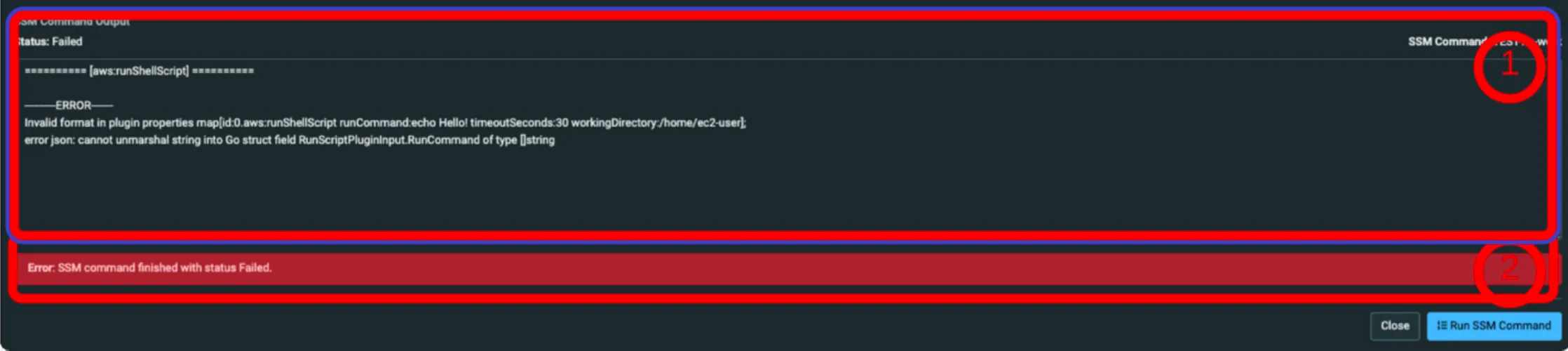
AWS Requirements
Here is a list of actions that are needed on the AWS side, by an AWS administrator, to enable SSM commands in Zen Master:
- Update the AWS IAM policy for ZEN Master
- Create a role with AmazonSSMManagedInstanceCore policy
- Apply that policy to your ZEN Master cluster
- Create an SSM document with these settings, options, and parameters:
- Document type: Command
- Platform types: Linux
- Target type: AWS::EC2::Instance
- No parameters
For more details, see AWS SSM User Guide.
Install SCTE-35 Modification Agent
The SCTE-35 Modification Agent allows the Broadcaster to add, remove, and modify SCTE-35 markers in a transport stream - see SCTE-35 Insertion for more information.
From the Broadcaster Details screen in ZEN Master, you can install the agent automatically rather than having to do it manually on the Broadcaster:
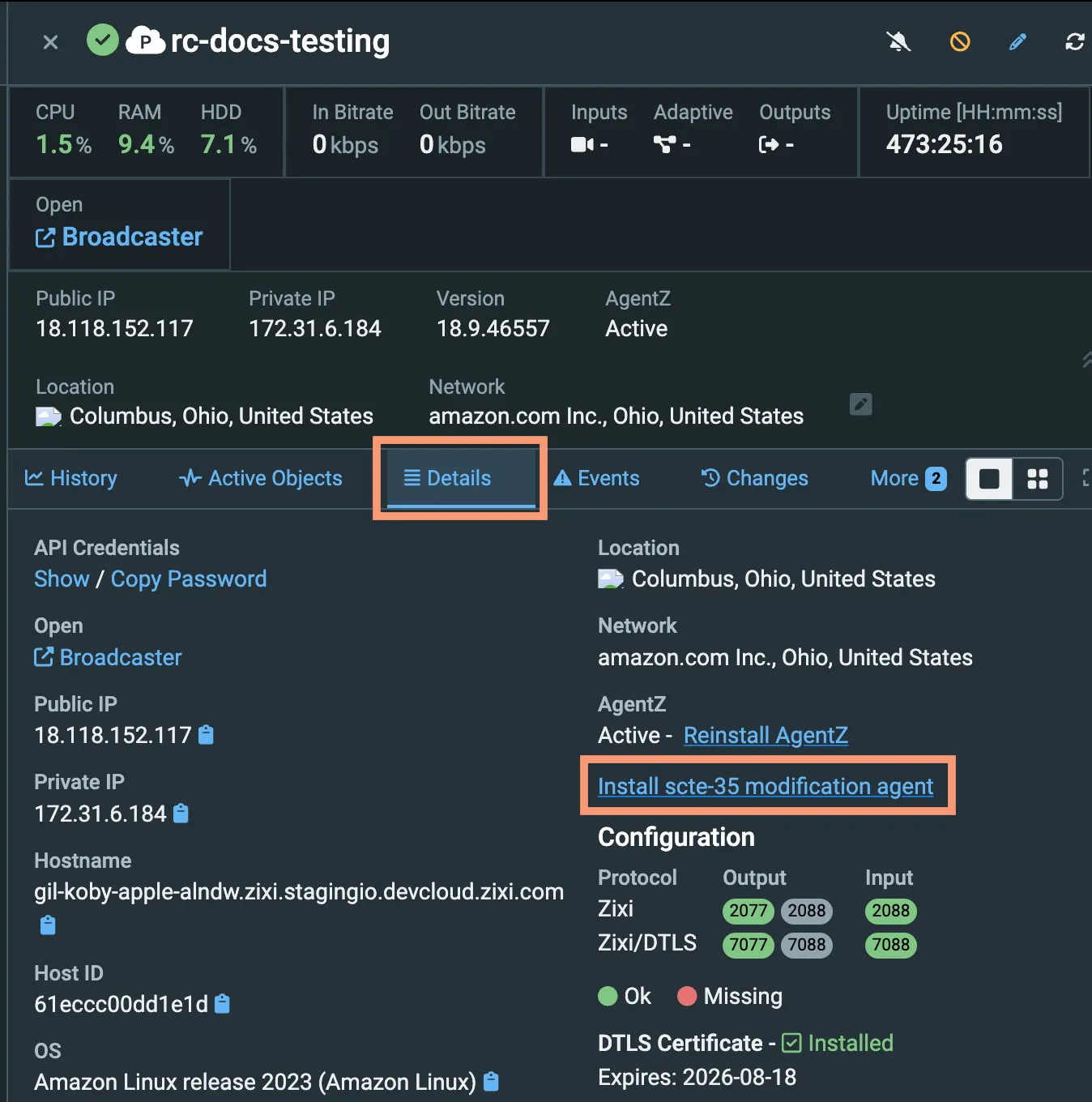
Click on Install scte-35 modification agent to show the confirmation dialog:
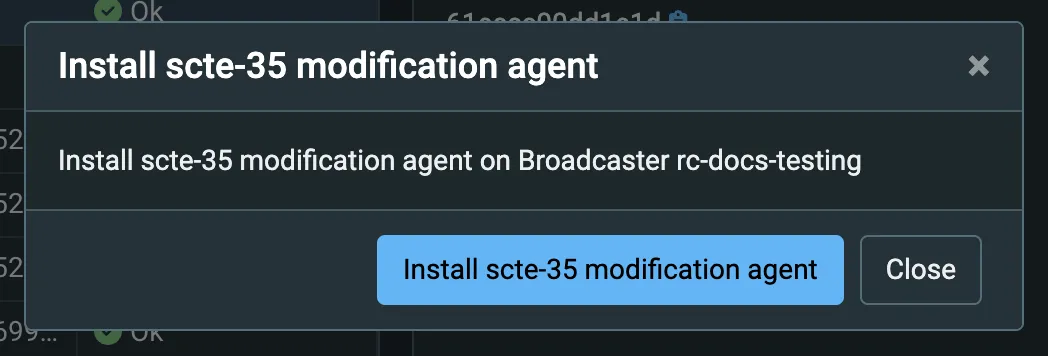
Click the Install scte-35 modification agent button to start the installation.
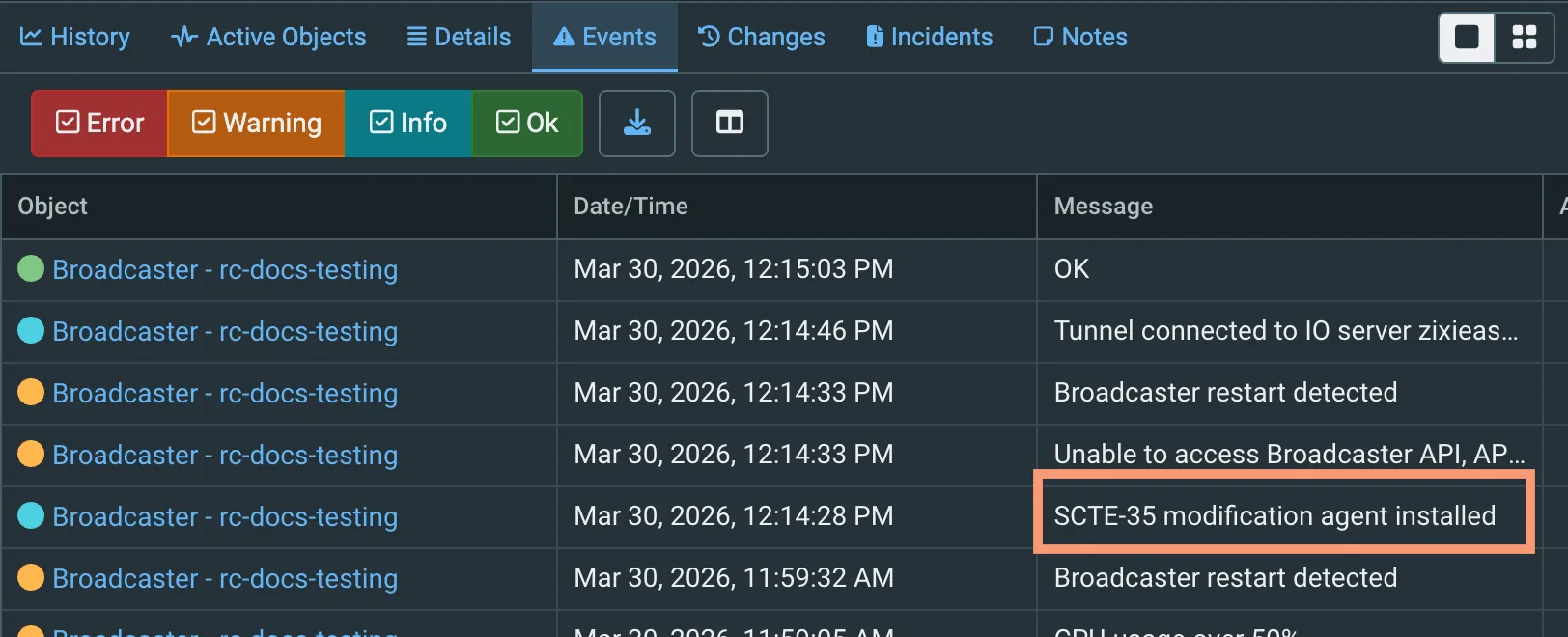
Note that the installation process happens asynchronously and takes some time, so you will not see any further indication in the Details tab. After a few minutes, go to the Events tab, and there you will see a message that the installation occurred if it succeeded: